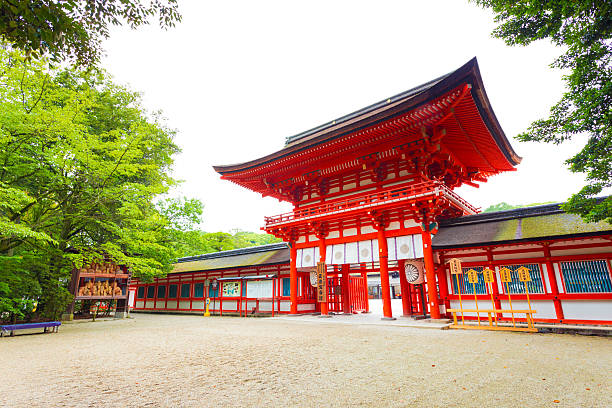
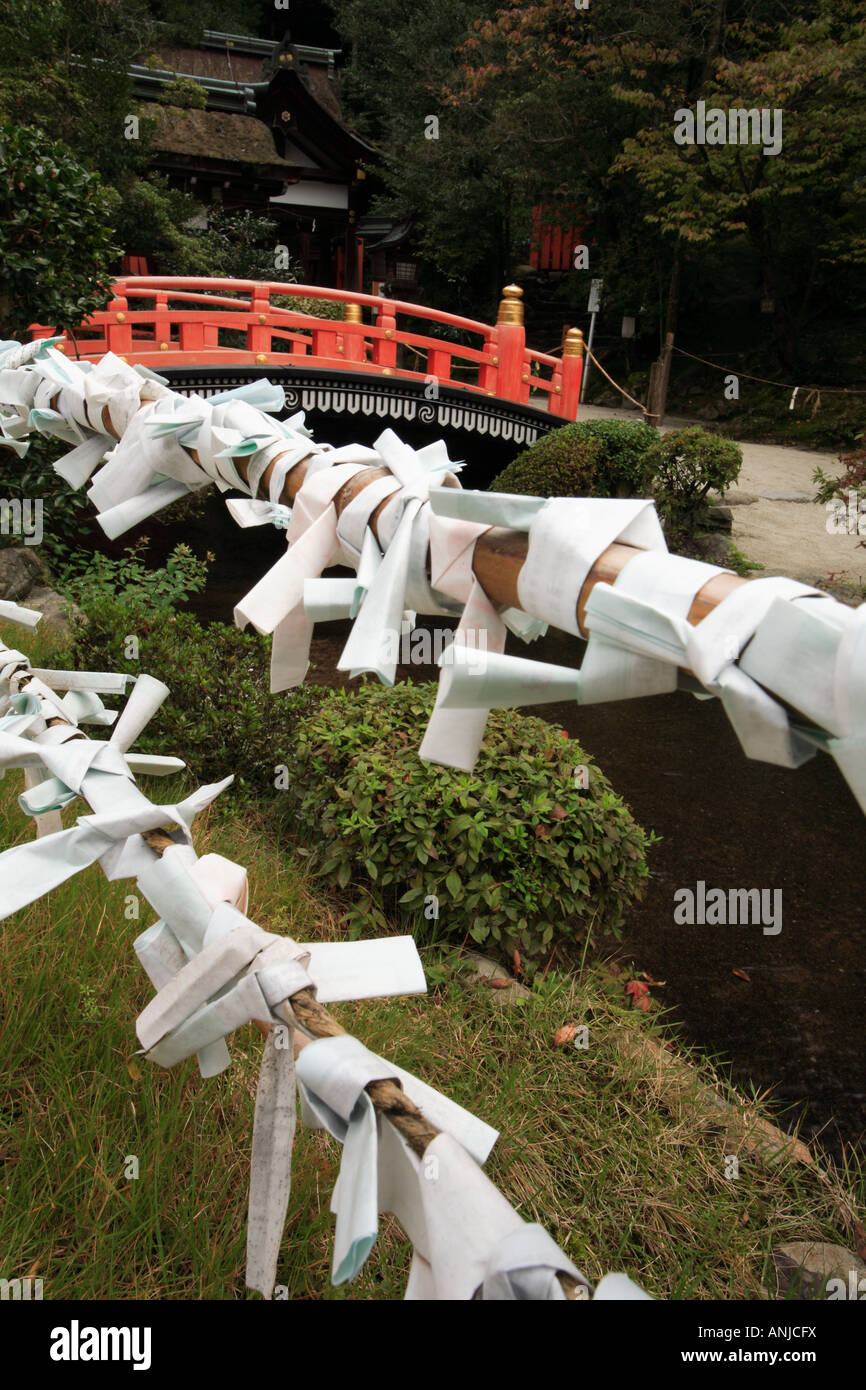
Les sanctuaires Kamo (賀茂神社, Kamo-jinja) Kamigamo-jinja (上賀茂神社, « sanctuaire Kamo supérieur ») et Shimogamo-jinja (下鴨神社, « sanctuaire Kamo inférieur ») sont une paire de sanctuaires shinto de Kyōto, au Japon. Ils comptent parmi les plus vieux du pays et sont tous deux dédiés à Kamo Wake-ikazuchi, le kami du tonnerre. Ils sont classés monuments historiques de l'ancienne Kyōto et font partie de la liste du patrimoine mondial de l'UNESCO.
Kamo no Nagatsugu (1139-1172 ou 1173), le père du poète Kamo no Chōmei, officia en tant que supérieur au Shimogamo-jinja (下鴨神社, sanctuaire Kamo inférieur).
Notes et références
Voir aussi
Bibliographie
- Michael Ashkenazi, Handbook of Japanese Mythology, Santa Barbara, Californie, ABC-CLIO, 2003 (ISBN 1-576-07467-6 et 978-1-57607-467-1).
- Theodore de Bary, Donald Keene et Yoshiko Kurata Dykstra, Sources of Japanese Tradition, New York, Columbia University Press, 1958 (OCLC 220375147).
- John Benson, Japan, Londres, Dorling Kindersley, 2003 (ISBN 0-7894-9719-0 et 978-0-7894-9719-2) (OCLC 52965361).
- John Breen et Mark Teeuwen, Shinto in History: Ways of the Kami, Honolulu, University of Hawaii Press, 2000 (ISBN 0-824-82363-X et 978-0-8248-2363-4).
- Sylvie Guichard-Anguis et Okpyo Moon, Japanese Tourism and Travel Culture, Londres, Taylor & Francis, 2009 (ISBN 9780415470018 et 0415470013) (ISBN 9780203886670 et 0203886674) (OCLC 227922678).
- John Whitney Hall, Donald Shively et William H. McCullough, The Cambridge History of Japan: Heian Japan, Cambridge, Cambridge University Press, 1999 (ISBN 0-521-22353-9 et 978-0-521-22353-9).
- John K. Nelson, Enduring Identities: The Guise of Shinto in Contemporary Japan, Honolulu, University of Hawaii Press, 2000 (ISBN 0-8248-2259-5 et 978-0-8248-2259-0).
- George W. Perkins, The Clear Mirror: A Chronicle of the Japanese Court During the Kamakura Period (1185-1333), Stanford, Stanford University Press, 1998 (ISBN 0-8047-2953-0 et 978-0-8047-2953-6).
- Richard Ponsonby-Fane, Kamo-mioya Shrine, Kobé, J. L. Thompson, 1934 (OCLC 6045058).
- Richard Ponsonby-Fane, Kyoto: The Old Capital of Japan, 794-1869, Kyoto, Ponsonby Memorial Society, 1956 (OCLC 36644).
- Richard Ponsonby-Fane, The Imperial House of Japan, Kyoto, Ponsonby Memorial Society, 1959 (OCLC 194887).
- Richard Ponsonby-Fane, Studies in Shinto and Shrines, Kyoto, Ponsonby Memorial Society, 1962 (OCLC 399449).
- Richard Ponsonby-Fane, Vicissitudes of Shinto, Kyoto, Ponsonby Memorial Society, 1963 (OCLC 36655).
- Richard Ponsonby-Fane, Visiting Famous Shrines in Japan, Kyoto, Ponsonby-Fane Memorial Society, 1964 (OCLC 1030156).
- Thomas Philip Terry, Terry's Japanese empire: including Korea and Formosa, with chapters on Manchuria, the Trans-Siberian railway, and the chief ocean routes to Japan; a guidebook for travelers, New York, Houghton Mifflin, 1914 (OCLC 2832259).
- Post Wheeler, The Sacred Scriptures of the Japanese: With All Authoritative Variants, Chronologically Arranged, Setting Forth the Narrative of the Creation of the Cosmos, the Divine Descent of the Sky-Ancestor of the Imperial House and the Lineage of the Earthly Emperors, Westport, Connecticut, Greenwood Press, 1976 (ISBN 0-8371-8393-6 et 978-0-8371-8393-0) (OCLC 263528152).
Articles connexes
- Chokusaisha
- Liste de sanctuaires shinto à Kyoto
- Saiin
- Système moderne de classement des sanctuaires shinto
- Vingt-deux sanctuaires
Lien externe
- « Visite virtuelle du site », sur www.google.com (consulté le ).
- Portail de Kyoto et de sa préfecture
- Portail du shinto
- Portail du patrimoine mondial